Friedrichshafen is home of the Zeppelin, on the side of the Constance lake. Every year, the AERO attracts its lot of light aircraft manufacturers and aviation passionates.
While many gliders, small airplanes, drones, and ultra lights were on display, we focused on the helicopters.
Bad Tölz is home of the winch training center for the german rescue teams. Located close to the Alps in the Southern Bavaria, Germany, the ZSA (Zentrum für Sicherheit und Ausbildung) provides indoor facilities to the mountain recue teams and helicopter crews.
Inside a room of approximately 1500 sqm and a height of 20 meters, two cranes simulate helicopter flights.
The first helicopter is a lucky BK117 that, instead of being scrapped, was shipped from the US back to Germany. It was then dismantled, the structure was kept, with the windows, the doors, and the landing skids. An electric winch was installed on a side. Fans create the downwash, and strobe lights simulate the shadow of the rotor blades hiding the sunlight.
The other aircraft was built by the Austrian company AMST. The BK117 was not sufficient to simulate bigger helicopters such as the Super Puma or NH90. The equipment is similar to the BK117, with small improvements. The winch can be positioned differently, closer to the fuselage, or farther out. The doors can slide to the front or to the back. All this will depend on which type of aircraft you are suppose to be flying.
The aircraft are piloted from the cockpit like real helicopters. Even though the behaviour is not meant to be realistic to the pilot, the platform provide the 6 axes of movement: translation forward and backward, to the sides, up and down, pitch, roll, and yaw.
The simulators are not meant to train the pilots, but the cabin crews: winch operator, rescuer under the hook, or any other personnel who has to be lifted or dropped from a helicopter. The benefits are obvious: training costs drop to a fraction of the flight costs, the flight can be paused at any moment, and even the wind and noise can be silenced in order to practice quietly.
Aiirsource published a video disclosing the ammunition loading by ground crews of the Apache AH64D helicopter.
Apache maintainers use dummy rounds to test the weapons systems on a Boeing AH-64D Apache helicopter. An ammunition handling check is done periodically to check the onboard weapons systems to include the 30mm M230 E1 chain gun, the AGM-114 Hellfire missile and the Hydra 70 rocket.
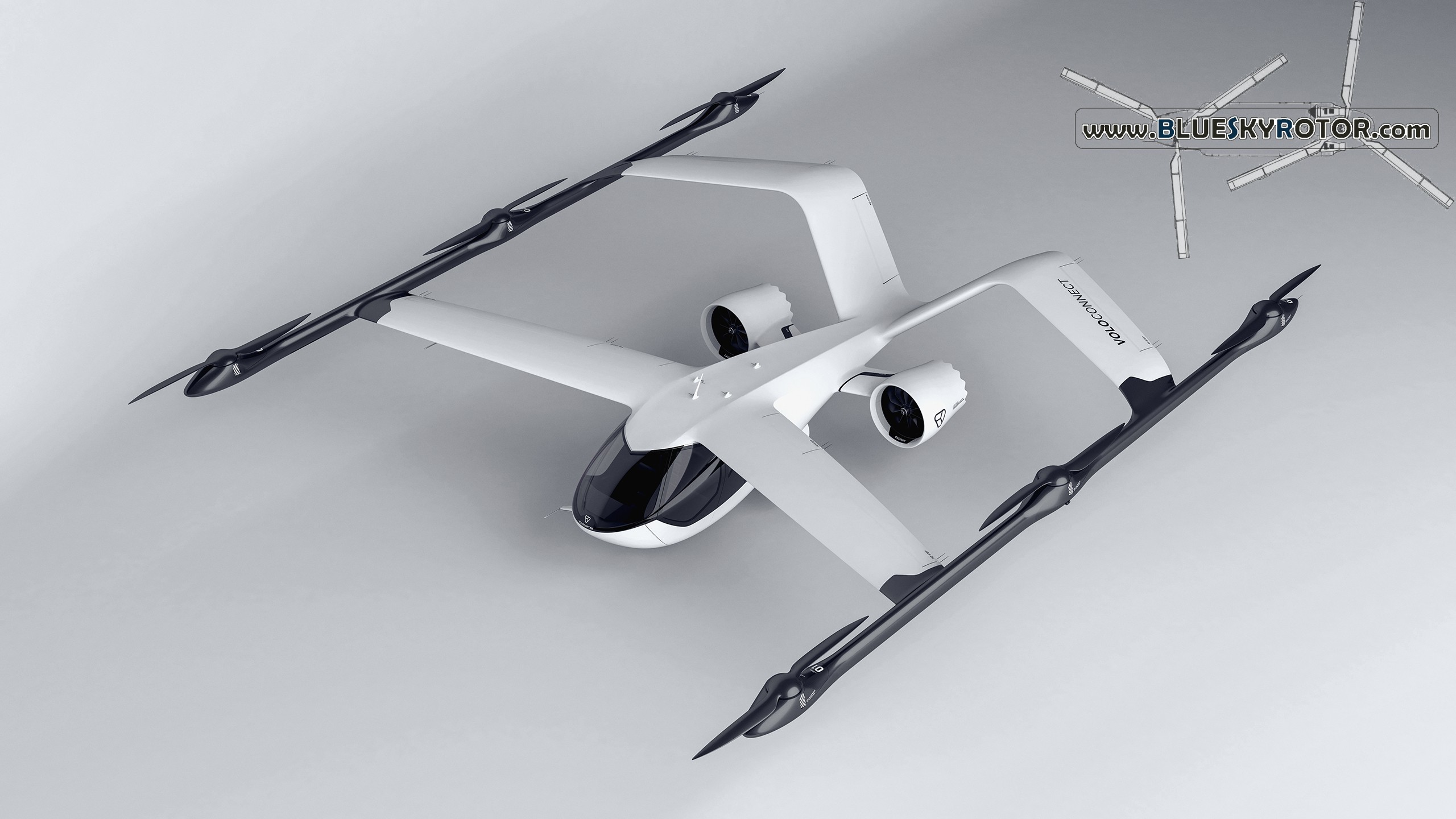
E-Volo performed their first flight in Bruchsal, Germany, 30th March 2016 with a pilot on board of their prototype of the Volocopter VC200 (callsign D-MYVC, also named “White Lady”).
The multirotor helicopter maintained a height of 20 to 25 meters above ground.
VC200 Volocopter first manned flight, from the ground
VC200 Volocopter first manned flight, cockpit view
The aircraft is displayed with a wide range of armament: KD-9 air-to-ground missiles, 57 mm rockets, TY-90 air-to-air missiles, and a 23 mm machine gun pod. 90 mm rockets are displayed on the side. However, considering the heavy rocket launcher, it may not be possible for the Z-19E to fly with both the 90 mm rockets and the anti-tank missile launcher.
July 07th, 2015. Airbus Helicopters presents its brand new prototype of a modified H135, featuring extremely low noise in flight. A reduction of no less than 10 EPNdB (perceived noise), corresponding to a reduction by 90 percent of the noise of a standard H135 helicopter. (More information on icao.int, wikipedia.org/EPNdB, or wikipedia.org/Loudness. To refresh your logarithmic knowledge on the dB, check this.)
The aircraft displays an unusual shape to those familiar with the product family: T-tail horizontal stabilizer, new rotor blades… Continue reading Bluecopter→
Airbus Helicopters, Bell Helicopters, Turkish Aerospace, Russian Helicopters… The 2015 edition of the Paris Air Show was far from being dedicated to the sole helicopters, but several manufacturers were there on the display.
Don’t get the wrong idea, Paris Air Show is mostly for planes
The French Army is proud of the NH90 TTH, used in operation in Africa and middle east.
After delivery in September this year, the German rescue company ADAC proceeded with their first rescue winch operations training on the EC145 T2. The training took place in the Alps, southern Bavaria. Several teams enjoyed the large cabin suitable for 10 crew members with their full rescue gear. The aircraft is equipped with a folding rescue winch over the cabin side door.