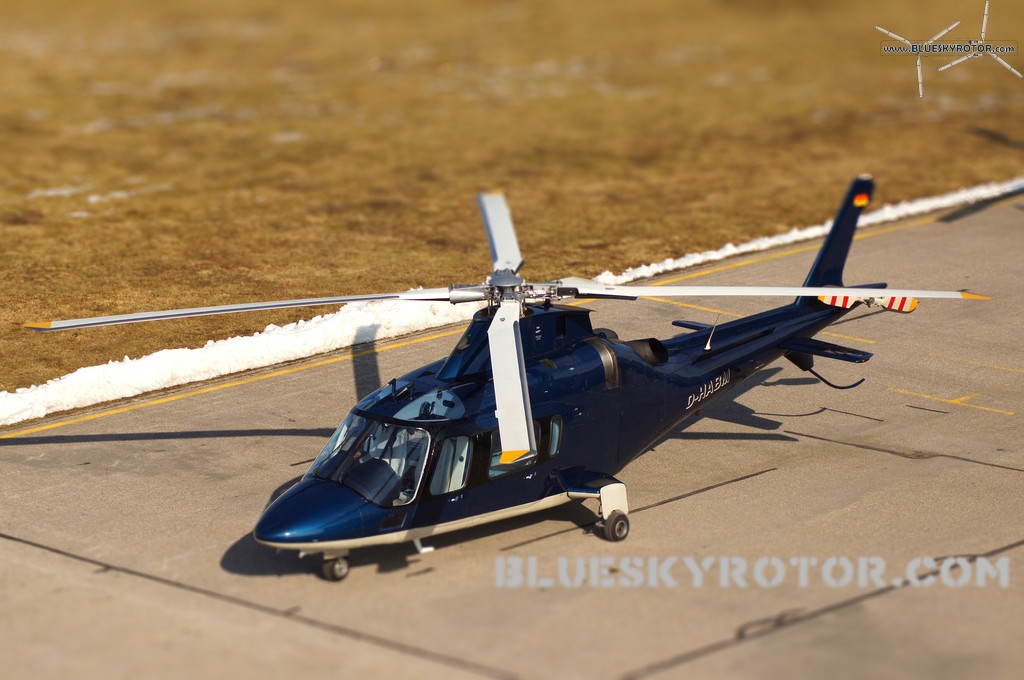
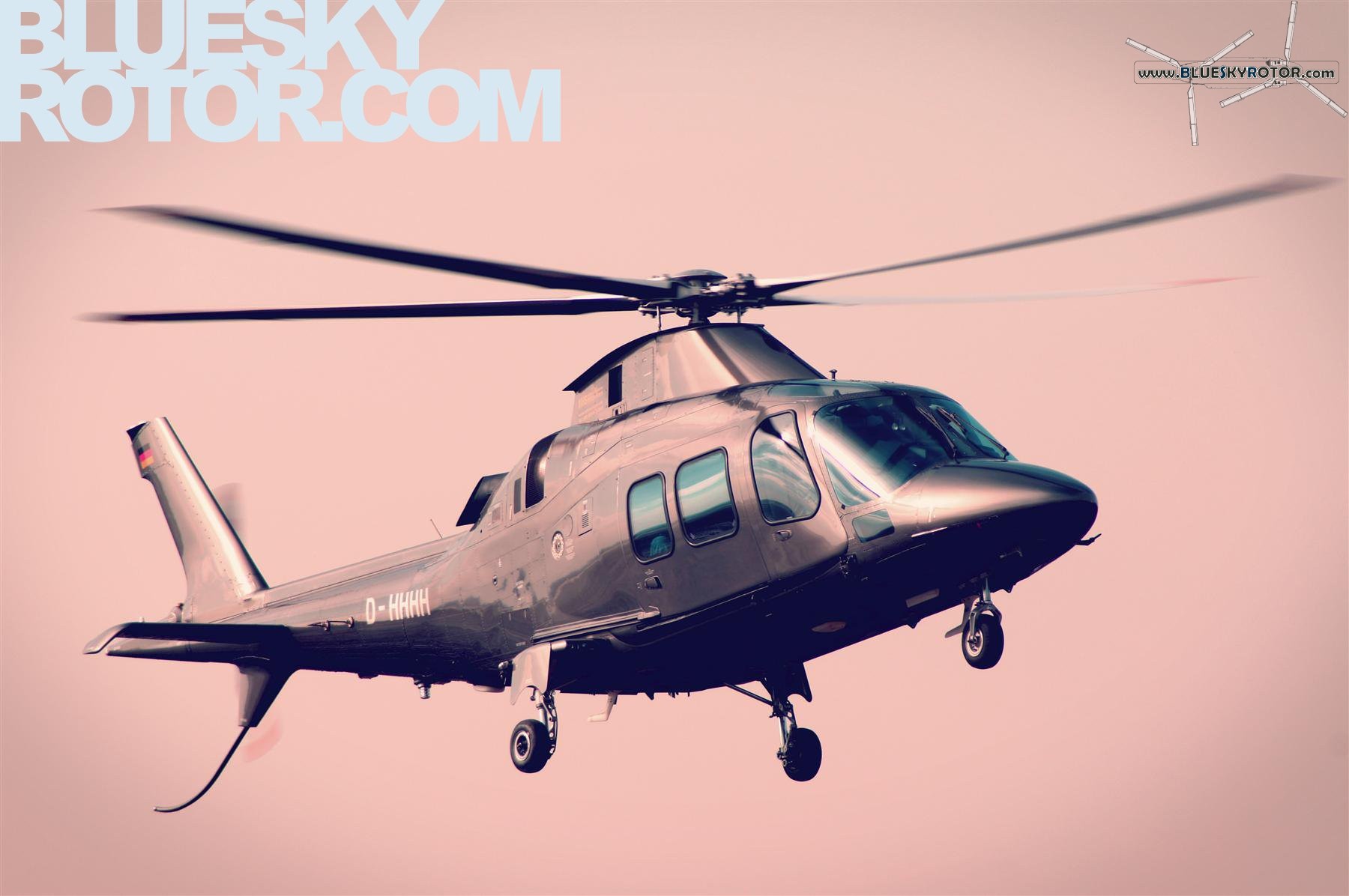
AgustaWestland has a museum accessible to the public in Cascina Costa close to Milan, Italy. The facility is only one of the numerous Italian locations as in Naples, Rome or Brindisi.
The museum actually covers only the italian side of the company, founded by Giovanni Agusta and directed by the Agusta family since the beginning of the 20th century. While visiting the museum, you would discover that the Agusta family did not build only aircraft, but also motorbikes. Nevertheless, most of the museum displays real helicopters, models and various parts (vertical stabilizer of an AB609, main gear box of an AW101…). Agusta built original helicopters as well as types under license, mostly from Bell.
If you have the opportunity, go and have a look, it is worth your time.
Both designations EC145 T2 and BK117 D2 refer to the same aircraft.
Enhancements incorporated in the T2 version of the 4-metric-ton category EC145 include new Arriel 2E engines and the company’s signature Fenestron® shrouded tail rotor, along with upgraded main and new tail rotor gear boxes, and an advanced cockpit that uses Airbus Helicopter’s innovative Helionix digital avionics suite with 4-axis autopilot.
EC145 T2 cockpit with Helionix avionics systemEC145 T2 D-HADW during demo tour in Asia
Every year and a few steps away from the lake of Constance, southern Germany, the airport of Friedrichshafen hosts the AERO trade fair, gathering many manufacturers from the light general aviation.
Ultra Lights and gliders, small and light aircraft, gyrocopters and helicopters, navigation systems and digital maps, everybody had something to keep himself busy.
Of course, I headed for the helicopters. The exhibition is mostly European. Robinson was not present, as well as bigger manufacturers like AgustaWestland or Airbus Helicopters.
e-volo
e-volo is a young German company aiming for an electric “multicopter”. The Volocopter is a dream to every young engineer: the elegant concept featuring 18 electric motors (55 to 90 kW) proved its feasibility with an indoor unmanned flight last year (November 2013), and outdoor “real” flights are expected with excitement.
The aircraft will be certified as Ultra Light with a gross weight of 450 kg and 2 persons side by side.
Cruise speed would be at least 100 km/h, longer than 1 hour and higher than 6500 ft.
e-volo VC200e-volo VC200
GUIMBAL
The two-seater is worldwide famous, but not yet big enough to seriously compete against the almighty Robinson. The Cabri is now fitted with a cargo hoist up to 220 kg and models produced after S/N 008 can be easily retrofitted.
GUIMBAL Cabri with 220kg hoistGUIMBAL Cabri cockpit
SAGITA Helicopters
SAGITA Helicopters is a Belgian company created in 2008, working on a new helicopter design based on a Ljungström turbine. The bulky hull covers a centrifugal turbine, that powers both of the rotor plates. The 2 pairs of blades are contra-rotating coaxial rotors. According to the brochure, the transmission system requires no lubrication or cooling!
The air intake is located at the rear of the fuselage and the exhaust is a thin gap between the hemispheres of the rotor head.
Despite succesful flight tests of a 1/5 scale model and wind tunnel experiments, the full scale prototype is expected to make its maiden flight only next year.
SAGITA helicopter mock upSAGITA helicopter mock up from behindLjungström turbine from Wikipedia
DYNALI Helicopter Company
DYNALI is another Belgian helicopter manufacturer. The first model, the H2, was under powered and got replaced by the H2S, powered by a Subaru engine. The H3 was on display.
The H3 is available as a kit for 100 000 EUR or ready to fly for 110 000 EUR. The H2S is more performing and comes with a slightly higher price of 125 000 EUR ready for flight.
With a gross weight of 450 kg, the H3 qualifies as a Class 6 ULM in France.
The two-seater is powered either with a Thunderbird 130 shp or with a Lycoming O-320 B2C (four cylinders and 160 shp) and qualifies as a French ULM with a gross weight of 450 kg.
IRI T-LineIRI T-Line from behindIRI T-Line, cockpit interiorIRI T-Line dashboard
Syton AH130Syton AH130 dashboardSyton AH130, detail of the tail rotor
KONNER Helicopters
Konner is an Italian helicopter manufacturer producing its own Diesel turbo engines. The TK250 produces 250 shp at 2300 rpm.
The warm welcome with big slices of prosciutto was noteworthy.
The aircraft seems to come in any colour you could imagine, inside as well as outside. It can be powered with aviation fuel (kerozene, JP-4…) as well as diesel. Example was taken from a customer in Micronesia using the helicopter as help for fishing. The aircraft is provided with the same fuel as the ship: diesel.
KONNER K1KONNER K1 cockpitKonner K1, detail of the joystickKONNER K1, detail of the tail rotorKONNER K1
HELIPARK GmbH
This German company started the development of the HPC450, a small helicopter. The model has never flown yet, but the display looked promising and we could expect a maiden flight soon.
HELIPARK HPC450HELIPARK HPC450 engineHELIPARK HPC450, detail of the tail rotorHELIPARK HPC450, detail of the flight controlsHELIPARK HPC450 from behind
The day was rather grey, not providing much hope for a VFR weather. Shortly before my arrival at the airport, I was surprised to follow two trucks carrying wrecks. 2 Bo-105, easy to recognize, but not to identify. No clear markings were displayed, only the distinctive olive colour would let you imagine a previous life in the air force.
Once every month, the South African Air Force museum in Zwartkop, Gauteng, flies its helicopters. This small air show is opened to the public, but only few people actually come. Unlike major crowded meetings, this makes the event very nice to attend.
What would you see there?
Helicopters, of course, and other aircraft, such as the Harvard. The helicopters are military, with the corresponding colour and markings. Consequently, it is not so easy to distinguish them from the landscape. Photographers would complain that the subject does not really stand out.
Alouette II landing on parking in front of the South African Air Force museum, Swartkop, GautengAlouette III after flight inspection with a pilot getting prettyAlouette III in approachAlouette III in flightAlouette III on groundAlouette III landingAlouette III landing on taxiwayAlouette III landingAlouette III landing on taxiAlouette III parkingAlouette III parkingAlouette III parking and taxiRed Alouette III passing byRed Alouette III approachingAlouette III parked on the shadowAlouette III showing offAtlas C4M Kudu ZU-CWZHarvard on low pass
2 Harvard in formation3 Harvard in formationHarvard formation approachHarvard on parkingHarvard taxiingHarvard tourSunglasses reflectionZwartkop South African Air Force Base, Alouette II and Alouette III
Today was a cold spring day at Grand Central airport, in Gauteng province, South Africa. Strong crosswinds let only a few helicopters take-off.
Bell 407 and R44 at FAGC airport, Gauteng province, South AfricaBell 407 at FAGC airport, Gauteng province, South AfricaEC130 mercy helicopter at FAGC airport, Gauteng province, South AfricaEC130 mercy helicopter at FAGC airport, Gauteng province, South AfricaR44 at FAGC airport, Gauteng province, South AfricaR44 at FAGC airport, Gauteng province, South AfricaBell 407 and R44 at FAGC airport, Gauteng province, South Africa
AgustaWestland released a picture of the Project Zero prototype. Only unmanned hover flight has been tested yet, with the rotors in horizontal position.